Tesla Robots Learn By Practicing In School
Tesla is using a dedicated facility to help its new humanoids master tasks through experience rather than just pre-coded instructions.
By Isabella Morales ·
The biggest change isn't the robot itself, but how it learns to think.
It has been a rapid transformation inside Tesla’s Fremont factory. Until this spring, that space was dedicated to building the Model S and Model X. By late spring, Tesla had cleared out the old vehicle assembly line in just 46 days to make room for a new operation. That new line is now sized to handle one million units annually, and the company states that the robots coming off it are the first to meet the standards of a real commercial product. Elon Musk confirmed on Wednesday's earnings call that most of the necessary equipment is already in place, with output expected to rise toward roughly 20,000 robots per week as the line reaches full speed.
Musk compared the production growth to a classic S-curve, noting that the initial slope is shallow. The engineering team is currently refining the robot's AI, electromechanical design, and reliability. They expect to finish this work by the end of next year, at which point Tesla plans to begin delivering Optimus units to outside companies. These robots are intended to handle dangerous, repetitive, and around-the-clock jobs.
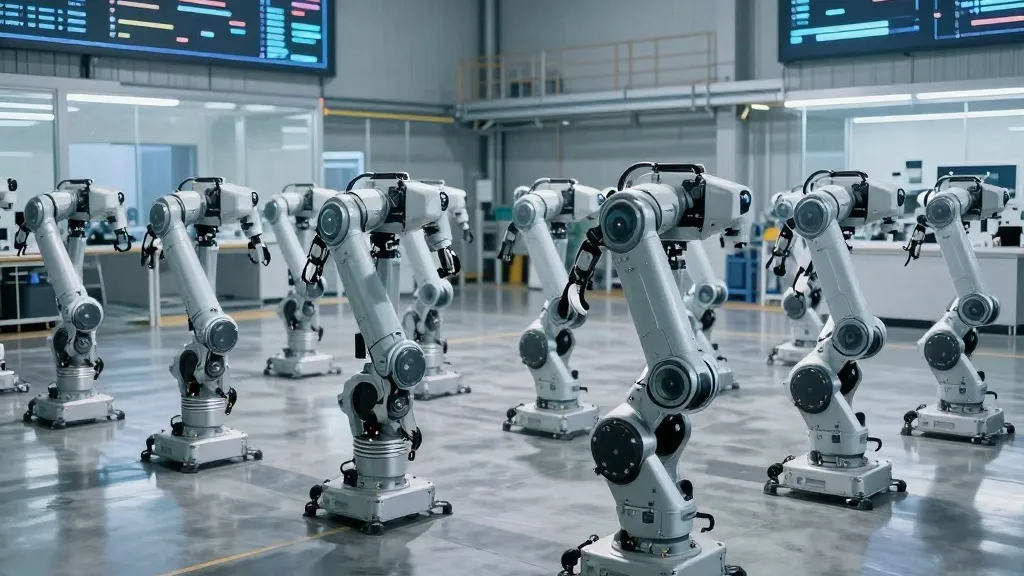
A major hurdle for humanoid robots is learning without a massive fleet to gather data from. Unlike Tesla's cars, which send driving data back from millions of vehicles, Optimus starts with zero history. To solve this, the company is launching an Optimus Academy. This facility will house 10,000 to 20,000 robots that practice a wide variety of tasks. Every unit produced at Fremont will serve as a data source, feeding its experiences into the next version of the AI model.
Hardware upgrades are also on the horizon. Tesla plans to integrate its AI5 chip into the Optimus line next year. Musk indicated that a new video demonstrating the robot performing tasks driven by AI rather than preprogrammed motions should arrive within one or two months. He specifically criticized rival humanoid demonstrations that rely on scripted routines, arguing that those methods would not hold up in the real world.
The supply chain is already aligning with these production goals. In September, Tesla certified Tuopu, Joyson, and Sanhua as mass-production partners for Optimus components. Meanwhile, a much larger Optimus factory is rising at Giga Texas, with drone footage showing the steel frame nearing completion. Musk has set a long-term target for that plant at 10 million robots per year.
Executives noted that production costs are trending toward the manufacturing cost of the Cybercab, indicating the robot is engineered for volume from the start. However, the hands remain the most difficult design element. That challenge is where much of the current engineering focus is concentrated, as the team works to ensure the physical design matches the software capabilities.
Source: Teslarati