Electric Pickup Withdrawal: Tesla Ends Cybertruck Plans for Southern Hemisphere
After nearly seven years of holding deposits, Tesla has officially canceled its Cybertruck launch in Australia and New Zealand, citing the high cost of adapting the vehicle for right-hand-drive markets.
By Rahul Mehta ·
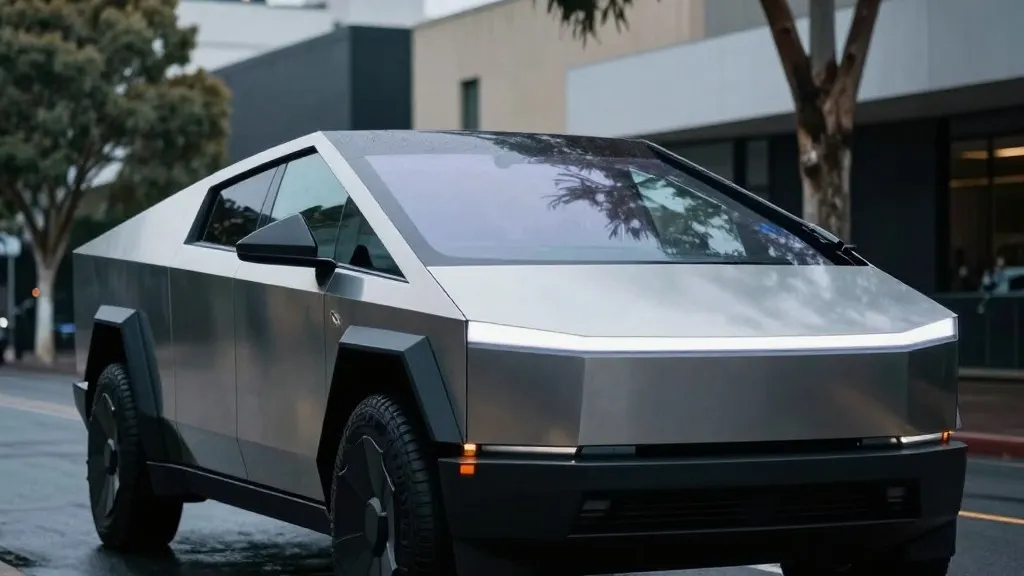
For residents of Australia and New Zealand who have been awaiting the arrival of Tesla’s electric pickup, the wait has now ended with a formal cancellation. Today, the automaker confirmed that the Cybertruck will no longer be produced for these two markets. Customers who placed reservations are receiving notifications that their orders are void, with full refunds of their initial deposits to be processed within the next month. As a gesture of goodwill, Tesla is offering a one-year free subscription to its Full Self-Driving (Supervised) software to those who choose to purchase a right-hand-drive Model 3 or Model Y instead.
The decision marks the conclusion of a long period of uncertainty for early adopters. The timeline of events reveals a slow retreat from the region. In November 2019, Australian customers began paying A$150 to reserve the vehicle, a sum that was intended to lock in a spot in the initial production run. By May 2022, Tesla quietly closed the reservation page for the country, replacing it with a button to receive updates, but did not refund the deposits at that time. This left thousands of customers in a state of limbo for four years while the company maintained that the truck was coming.
In 2024, the company shipped a Cybertruck to Australia for a display tour, and CEO Elon Musk indicated to shareholders that certification for other markets might occur the following year. However, that anticipated year passed without a right-hand-drive version being finalized. The core technical hurdle remains the vehicle’s design: the Cybertruck is currently built exclusively in left-hand drive. Adapting it for markets like Australia and New Zealand, which require right-hand steering, necessitates significant re-engineering and certification under local design rules, a costly process that Tesla has now decided is not financially viable.
The financial rationale behind the cancellation is rooted in current production volumes. Tesla reported that it delivered only 8,295 units in its 'Other Models' category for the third quarter of 2026, a figure that largely represents Cybertruck sales. This pace translates to an annual output of roughly 30,000 units, a fraction of the production line’s 250,000-unit annual capacity. For a vehicle with such modest global sales, the expense of re-tooling the platform for two markets with a combined population of approximately 33 million people is difficult to justify.
The Cybertruck’s international footprint has thus far been limited to left-hand-drive regions. Deliveries began in South Korea late last year and in the UAE in January, with configurators opening in Saudi Arabia, Qatar, Jordan, and Israel. The truck remains absent from the European Union, primarily due to pedestrian safety regulations. This pattern suggests a strategic focus on expanding into existing left-hand-drive markets rather than developing new right-hand-drive variants.
Prior to this official announcement, a crowdsourced survey in 2020 suggested Australia was a significant market, ranking third globally behind the US and Canada with about 3% of all reservations. By 2023, total global reservations were estimated at around 2 million, though Tesla has never officially confirmed these regional figures. The current decision confirms that the vehicle is becoming a niche product, primarily targeted at North American buyers, as the company focuses on selling the existing left-hand-drive inventory rather than investing in further international adaptation.
The email sent to reservation holders stated that after careful consideration, plans to produce the Cybertruck for Australia and New Zealand have been discontinued. The message noted that the company is unable to fulfill the reservations and that they will be cancelled. While many reservation holders may have already opted out, the formal announcement provides a definitive end to the speculation that has surrounded the vehicle’s arrival in the region since 2019.
Source: Electrek