Musk bets on accelerated chip delivery for Texas mega-fab
The Tesla and SpaceX joint venture is pushing suppliers to speed up equipment shipments to meet a risky 2028 production target.
By Dmitri Sokolov ·
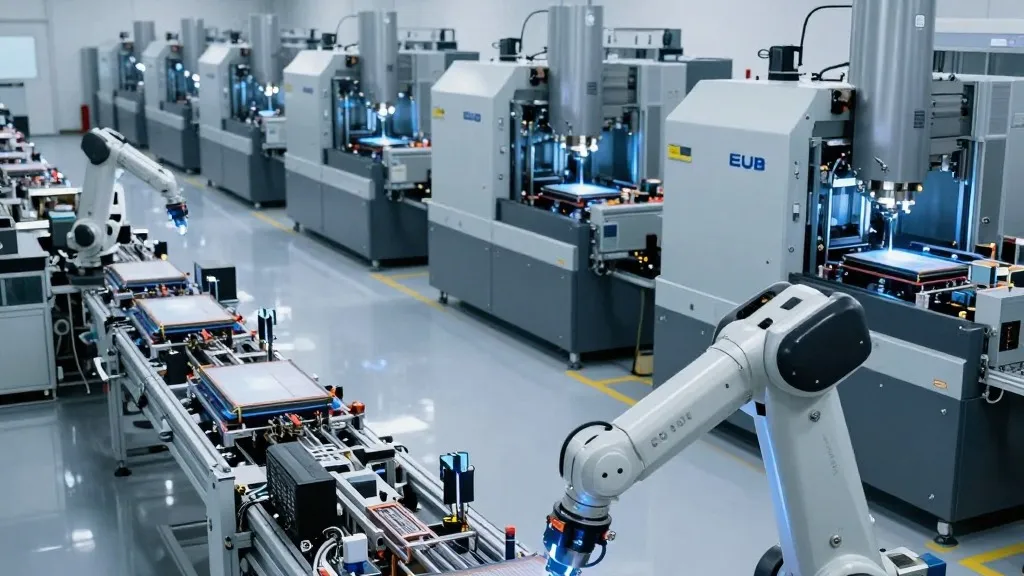
Elon Musk is gambling on a compressed timeline for one of the most ambitious semiconductor projects in history, telling investors yesterday that key suppliers have agreed to rush deliveries of critical machinery. The move is designed to support the Terafab venture, a massive joint effort between Tesla and SpaceX that aims to produce chips at a scale that could rival the economic output of a mid-sized nation. However, the schedule remains fraught with uncertainty, with Musk himself admitting the targets are highly aspirational and subject to significant variance.
During a live broadcast of SpaceX’s Q3 2026 earnings call on X on October 20, Musk outlined the immediate steps being taken to ensure the facility in Gibbons Creek, Texas, stays on track. The primary goal is to begin volume chip production at the main site by the third or fourth quarter of 2028. To achieve this, the company is leaning heavily on partners to accelerate the arrival of high-value equipment, a move that signals how tight the margins for error are in this multi-billion-dollar undertaking.
The path to 2028 begins with a smaller milestone in the near term. SpaceX plans to fabricate its first experimental test chip at a research facility in Austin, Texas, around the second quarter of 2027. This initial step is crucial for validating the process before the main Texas facility comes online. Musk expressed gratitude to ASML and other suppliers for their cooperation in speeding up these deliveries, noting that without this accelerated support, the aggressive dates might have been impossible to consider.
Beyond the chip factory, Musk used the same broadcast to detail the massive computing power his AI companies are building. He expects to have between 2.5 and 3 gigawatts of active computing capacity by the end of this year. Looking further ahead, he stated he is highly confident that an additional 10 gigawatts will come online in 2027, bringing the total to 13 gigawatts. He suggested he would be surprised if they failed to hit that 13-gigawatt mark by the end of next year.
To fuel this growth, SpaceX and xAI are aggressively procuring next-generation hardware from NVIDIA. A major component of this strategy is a training cluster comprising 440,000 Nvidia "Vera Rubin" GPUs, which is scheduled to come online by the end of the second quarter of 2027. This push for internal capacity contrasts with other major industry projects, such as the 10-gigawatt Project Stargate and Meta’s 5-gigawatt Hyperion, which are both expected to reach full capacity in the 2030s.
The Terafab project is not just about volume; it is about vertical integration. The facility is designed to handle logic, memory, and advanced packaging in a single location, utilizing Intel’s 14A manufacturing node technology. Intel officially joined the venture in April 2026 to help co-develop and refactor the silicon fabrication technology. This partnership is critical because it provides access to a cutting-edge process node, reducing reliance on external foundries like TSMC for future AI processors, self-driving vehicles, Optimus robots, and SpaceX’s orbital data centers.
ASML remains the most critical partner in this ecosystem, as it is the sole commercial supplier of the extreme ultraviolet lithography systems required for leading-edge production. Each of these machines costs approximately $400 million. Unofficial reports suggest that Terafab’s first EUV tool was originally slated for delivery in mid-2027, though it remains unclear if this date has been moved up due to the expedited shipments Musk referenced. Other major equipment providers include Applied Materials, Lam Research, KLA Corporation, and Tokyo Electron, which are supplying front-end processing and control machinery.
The supply chain also extends to South Korea, where Tesla and SpaceX are in talks with roughly ten equipment makers, including Hanmi Semiconductor and HPSP. These firms provide specialized components such as advanced packaging tools, high-pressure hydrogen annealing equipment, and process valves. Despite the rush, capacity across the semiconductor supply chain remains tight, making the coordination of these deliveries a complex logistical challenge.
Experts have raised questions about the sheer scale of the 1-terawatt annual output goal. Research firm Gartner estimates that total global AI-optimized data center capacity is roughly 44 gigawatts as of late 2026. That figure represents just 4.4% of what Terafab plans to produce annually. While global AI computing capacity has grown by roughly 3.3 to 3.4 times per year since 2022, according to EpochAI, the jump to terawatt-scale production is a steep climb. Musk’s claim that the facility could generate commercial value rivaling the 20th-largest global GDP, a spot currently held by Switzerland at approximately $1.14 trillion, underscores both the ambition and the risk of the project.
As the industry watches, the focus remains on whether the equipment will actually arrive in time. The success of Terafab will hinge on the ability of these global suppliers to deliver billion-dollar machines faster than their standard schedules, a task that will require unprecedented coordination in a market that is already under strain.
Source: Tom's Hardware